
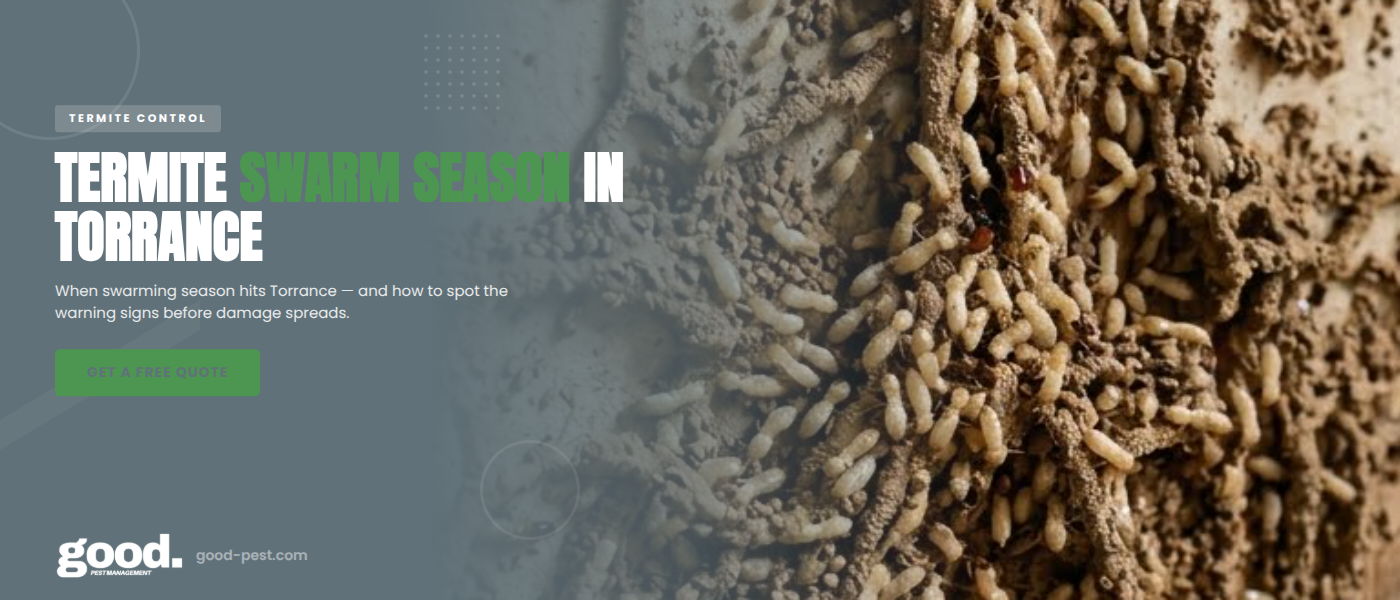
As a homeowner in Torrance, CA, you might assume that termites are primarily a concern in humid, tropical climates. The reality is quite different. Southern California's mild year-round temperatures and the unique mix of termite species found in the South Bay make this area one of the most active termite regions in the country. At Good Pest Management, we help Torrance homeowners understand when termite swarming season occurs, which species pose the greatest threat, and how to protect your property before damage becomes extensive.
Unlike many parts of the country that experience a single termite season, Torrance and the greater South Bay area deal with multiple swarming periods throughout the year. This is because Southern California is home to several different termite species, each with its own swarming schedule. The result is that Torrance homeowners face termite pressure during nearly every season.
Western subterranean termites, the most common species in Southern California, typically swarm from March through May during the spring months. These swarms usually occur during the daytime, often following warm weather after a period of rain. Spring is when most homeowners first notice termite activity because the swarmers are highly visible as they fly toward windows and light sources.
Western drywood termites, which are the most prevalent termite species across Southern California overall, swarm during the fall season, typically between September and November. Drywood termite swarms tend to happen during the warmest part of the afternoon. Because fall swarming occurs later in the year, many homeowners miss these events or mistake them for other flying insects.
Formosan subterranean termites, while less common than native species, have been documented in parts of the greater Los Angeles area. These aggressive termites swarm from April through July, usually in the evening hours. Their colonies can grow to enormous sizes, making them an especially serious threat when they do establish themselves near residential properties.
One of the most important things for Torrance homeowners to understand is that Southern California does not have a true off-season for termites. While swarming is seasonal, the worker termites in established colonies feed on wood continuously, regardless of the time of year.
The warm Southern California soil provides year-round activity for subterranean colonies. Unlike colder regions of the country where winter freezes force termite colonies into dormancy, our mild winters keep both drywood and subterranean termites active and feeding. Heated homes provide additional warmth that sustains colony activity even during the occasional cool spell.
This year-round pressure means that your home is constantly at risk. An average homeowner can go three years or more before noticing a termite infestation, during which time the colony has been steadily consuming the structural wood in your home. By the time visible signs appear, significant damage may have already occurred.
Understanding the differences between the two primary termite types in our area is essential for effective prevention and early detection. Each species behaves differently, produces different warning signs, and requires different treatment approaches.
Subterranean termites nest in the soil beneath and around your home. They require constant moisture to survive and build distinctive mud tubes along foundation walls, support piers, and other surfaces to travel between their underground colony and the wood they are feeding on. These mud tubes maintain the humidity levels the termites need and protect them from predators and exposure.
In Torrance, subterranean termites are most commonly found attacking wood at or below ground level, including floor joists, sill plates, and framing in crawl spaces. They can also reach upper stories by building mud tubes inside wall cavities where they are hidden from view. Subterranean termite damage typically follows the grain of the wood and has a layered, almost honeycomb-like appearance.
Drywood termites are fundamentally different from subterranean species in that they do not need contact with the soil. They establish their colonies directly inside the wood they are consuming, which means they can infest any wooden component of your home, from attic rafters and roof sheathing to window frames, door trim, and even furniture.
Because drywood termites live entirely within wood, they often establish themselves higher in the structure than subterranean species. They are commonly found in attic spaces, second-story framing, and wooden trim throughout the home. Drywood termite colonies are typically smaller than subterranean colonies, but a single home can harbor multiple separate drywood infestations simultaneously.
The most distinctive sign of drywood termites is frass, which consists of small, pellet-shaped droppings that the termites push out of tiny kick-out holes in infested wood. You may find small piles of what looks like fine sawdust or sand near baseboards, on windowsills, or beneath wooden furniture. These frass piles are often the first visible indication that drywood termites are present.
Early detection is your best defense against costly termite damage. Here are the warning signs that every Torrance homeowner should watch for throughout the year.
Torrance's location in the South Bay, just a few miles from the Pacific Ocean, creates climate conditions that influence termite activity in specific ways. The marine layer that rolls in regularly brings moisture that subterranean termites find attractive. Coastal fog and morning dew can keep soil around foundations damp enough to support termite colonies even during dry periods.
The moderate temperatures we enjoy year-round in the South Bay also mean that termite colonies never experience the temperature extremes that slow their activity in other parts of the country. Winter low temperatures in Torrance rarely drop below the 40s, which is well above the threshold that would cause termite colonies to become dormant. This consistent warmth allows colonies to feed and grow without interruption.
Additionally, many homes in Torrance were built during the mid-20th century building boom and feature wood-frame construction that was standard for the era. These older homes may lack the modern termite barriers and treated lumber that newer construction incorporates, making them more vulnerable to both subterranean and drywood termite infestations.
At Good Pest Management, we take a thorough, eco-friendly approach to termite treatment that aligns with our commitment to pet-friendly and environmentally responsible pest control. We understand that every home and every infestation is unique, and we customize our treatment plans accordingly.
Every termite service starts with a detailed inspection of your property. We examine the exterior perimeter, foundation, crawl spaces, attic, interior rooms, and any outbuildings or wooden structures on your property. We identify active infestations, assess the extent of any existing damage, and evaluate the conditions around your home that may be contributing to termite risk.
For subterranean termite infestations, we apply liquid termiticide treatments around the foundation and in areas where termites are actively foraging. We also offer monitoring and baiting systems that eliminate entire colonies by targeting the queen and workers at the colony level. For drywood termite infestations, localized treatments can address isolated colonies, while more extensive infestations may require whole-structure treatment options.
We believe that prevention is the foundation of effective termite management. After treatment, we recommend ongoing monitoring and annual inspections to ensure that your home remains protected. We also provide guidance on structural modifications and maintenance practices that reduce your home's vulnerability to future termite activity.
You should be alert for termite swarms during two primary periods in Torrance. Subterranean termites typically swarm from March through May, usually during the daytime following warm weather or rain. Drywood termites swarm from September through November, often during warm afternoons. Because these two swarming periods cover a large portion of the year, and because established colonies feed year-round regardless of swarming season, consistent vigilance is recommended.
Yes. It is not uncommon for Torrance homes to have both subterranean and drywood termite infestations simultaneously. Subterranean termites typically attack from below, entering through the foundation and targeting lower structural elements. Drywood termites usually establish themselves higher in the structure, in attic spaces, upper-story framing, and trim. Because each species has different behaviors and entry points, having one type does not prevent the other from infesting your home as well.
Termites cause an estimated five billion dollars in property damage across the United States annually, and Southern California is consistently among the highest-risk regions. A mature subterranean colony can consume approximately one foot of a 2x4 board in about six months. Drywood colonies are smaller and feed more slowly, but multiple colonies can be active in a single home. Because termite damage is not typically covered by homeowner insurance policies, the financial impact of an undetected infestation can be substantial.
The primary attractants for termites in Torrance are wood and moisture. Subterranean termites are drawn to moist soil near foundations, wood-to-soil contact, leaky irrigation systems, and poor drainage around the home. Drywood termites are attracted to any exposed wood, including attic vents, unfinished eaves, window frames, and door trim. Homes with wood siding, wooden decks, or untreated structural lumber are at higher risk for both species.
We recommend annual termite inspections for all Torrance homeowners. Because termites can cause significant structural damage before visible signs appear, regular professional inspections are the most reliable way to catch infestations in their early stages. Homeowners buying or selling property should also ensure a current termite inspection is completed as part of the real estate transaction.
Termite swarming season in Torrance, CA is not a single event but an ongoing reality that spans most of the year. Whether you are seeing swarmers in the spring, finding frass piles in the fall, or simply want the peace of mind that comes with professional protection, our team at Good Pest Management is here to help. We are committed to providing eco-friendly, pet-friendly termite solutions that protect your home and your family.
Contact us today to schedule your termite inspection and take the first step toward lasting termite protection for your Torrance home. Early detection and proactive treatment are the most effective and affordable ways to keep your property termite-free.