
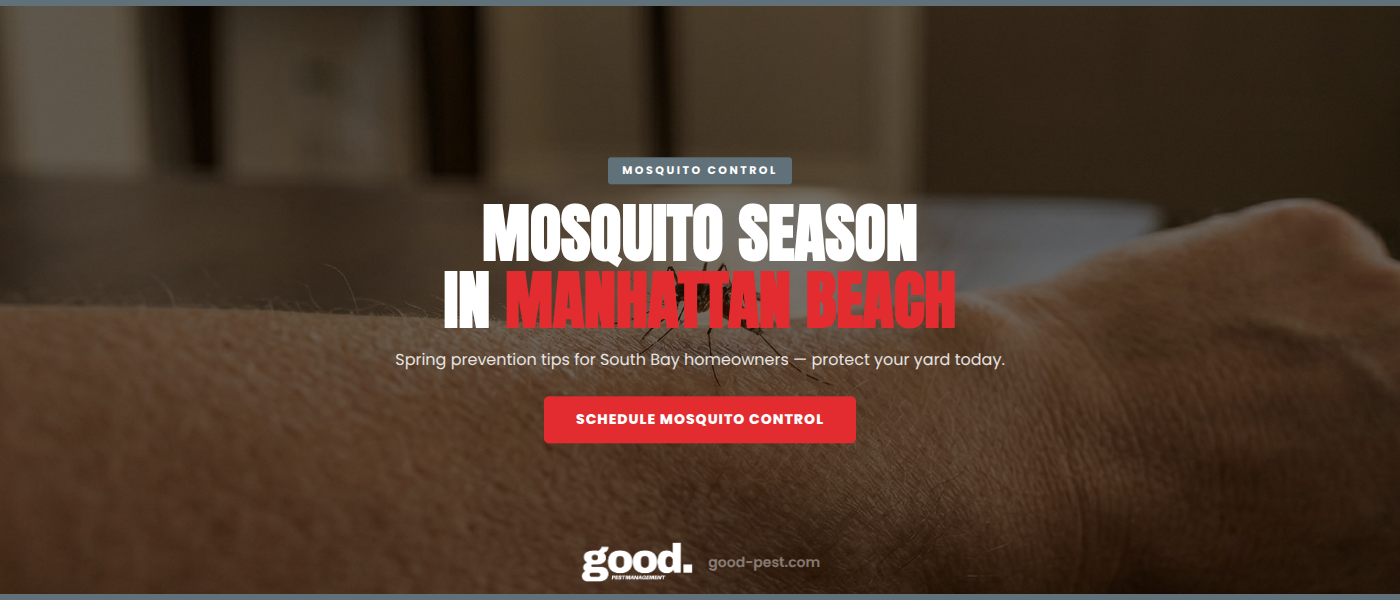
Spring in Manhattan Beach means warm ocean breezes, blooming gardens — and a sharp increase in mosquito activity across the South Bay. As temperatures climb and yards come alive with seasonal color, mosquitoes emerge from overwintering sites ready to breed. If you've noticed more bites during evening gatherings or morning walks this season, you're not alone. Mosquito control in Manhattan Beach is a real concern for homeowners who want to enjoy their outdoor spaces without worry.
At Good Pest Management, we've seen mosquito populations surge in early spring when warmer temperatures arrive ahead of schedule. Coastal humidity and mild winters create conditions that allow mosquito eggs to hatch earlier than in inland communities. A proactive approach makes a significant difference through the rest of the season. This guide walks you through why mosquitoes become active in spring, where they breed in coastal yards, and the most effective prevention steps available to Manhattan Beach homeowners.
Mosquitoes don't disappear entirely during Southern California winters — they slow down. When daytime temperatures in the South Bay consistently climb above 50°F, mosquito eggs begin hatching and larvae develop rapidly. By the time spring is in full swing, populations can grow seemingly overnight.
The Greater Los Angeles County Vector Control District reports that mosquito season in LA County typically runs from late spring through fall, peaking between June and November. But the South Bay's mild coastal climate means populations often become active earlier than in inland areas — giving local homeowners less time to prepare before the season accelerates.
One factor that makes spring particularly challenging is the presence of the invasive Aedes mosquito. Unlike native species that bite mostly at dawn and dusk, Aedes mosquitoes are aggressive daytime biters. Recognizable by their black-and-white striped markings, they're often called "ankle biters" for their preference for biting near the feet and lower legs. They're highly resilient — capable of laying eggs in containers holding just a teaspoon of water, with those eggs surviving dry conditions for weeks before hatching when moisture returns.
Southern California's spring warmth and coastal moisture create ideal conditions for mosquito populations to establish early. The sooner you start, the more comfortable your outdoor spaces will be through summer.
Mosquitoes need standing water to reproduce — and they don't need much. Half an inch of stagnant water is enough for a female mosquito to lay hundreds of eggs that mature into biting adults in as few as five to seven days.
In Manhattan Beach yards, the most common breeding sources include:
Manhattan Beach's marine layer deposits moisture across yards even without measurable rainfall. Breeding sites develop quickly in spring when the layer is thickest. Walking your yard weekly and draining standing water is one of the most impactful steps you can take.
If you have ornamental ponds or water features, treating them with biological larvicides — Bacillus thuringiensis israelensis (Bti) dunks — prevents larvae from maturing without harming birds, fish, or beneficial insects.
Most mosquito bites produce nothing more than an itchy red welt. But in Southern California, the health risks mosquitoes carry are real and worth understanding well before peak season arrives.
West Nile virus is the primary mosquito-borne concern in Los Angeles County. Spread by native Culex mosquitoes, it can cause fever, headache, muscle aches, and in serious cases, neurological illness. The Greater Los Angeles County Vector Control District detects West Nile virus in local mosquito pools every year — a clear reminder that the risk is ongoing, not theoretical. Older adults and those with compromised immune systems face the greatest risk of serious outcomes.
The invasive Aedes mosquito adds another layer of concern for South Bay residents. This species is capable of transmitting dengue fever, Zika virus, chikungunya, and yellow fever. While widespread California outbreaks haven't occurred, isolated local cases have been documented, and the Aedes population continues expanding across Southern California.
Children, older adults, and those with underlying health conditions face greater risk from mosquito-borne illness. Reducing mosquito populations around your property is a meaningful step toward protecting your household's well-being — and it starts with the prevention steps below.
A few consistent habits go a long way toward keeping mosquitoes from establishing themselves in your yard. Here are five practical steps every South Bay homeowner can take right now:
Dump and drain every week. Walk your yard and empty any container holding standing water. This breaks the breeding cycle before eggs mature. Check pot saucers, garden ornaments, upturned lids, and areas under deck furniture.
Clear and maintain gutters. Ensure gutters are free of debris and slope properly toward downspouts. Grade low spots so water runs away from the foundation rather than pooling.
Treat ornamental water features. If you have a pond, fountain, or bird bath you want to keep filled, use Bti dunks. These biological larvicides prevent larvae from maturing without harming birds, fish, or beneficial garden insects.
Repair window and door screens. Inspect all screens for tears, gaps, or poor seals. A properly fitted screen is one of the most effective barriers against indoor bites. Don't overlook garage door seals or pet doors.
Add mosquito-repelling plants. Lavender, citronella grass, basil, and marigolds naturally deter mosquitoes. Planting these near patios and seating areas adds beauty to your landscape while reducing nearby mosquito activity.
These steps work best when practiced consistently throughout the season. Even one forgotten container can support hundreds of larvae. When DIY prevention isn't providing the relief you need, professional mosquito treatment is the next logical step.
There are situations where consistent yard management alone isn't enough. If you're getting bitten despite eliminating every standing water source you can find, or if mosquito activity is consistently disrupting daily life in your backyard, it's time to bring in a licensed professional.
Common signs that professional mosquito treatment makes sense:
Professional mosquito treatments target adult mosquitoes in their resting areas — dense shrubs, tall grass, and shaded foliage — as well as active breeding sites. A licensed technician inspects your property, identifies problem areas specific to your yard, and applies targeted treatments designed to knock down active populations and reduce reinfestation.
Early spring treatment — before populations peak — gives you the best seasonal results and a more comfortable outdoor environment all season long.
At Good Pest Management, our approach starts with a thorough property inspection. When our licensed technicians arrive at your Manhattan Beach home, we walk the entire yard to identify potential breeding sites, resting areas, and conditions specific to your property — drainage patterns, landscaping density, shaded zones, and any standing water present.
That inspection informs a targeted treatment plan. We don't apply a one-size-fits-all spray. Instead, we address the specific pressures on your property with eco-friendly, pet-friendly solutions that are gentle around your family, your pets, and the garden you've worked hard to maintain.
Good Pest Management is licensed, insured, and a proud member of the National Pest Management Association (NPMA). We back every service with our 100% Satisfaction Guarantee — if mosquitoes return between scheduled visits, we return too at no additional charge.
Our residential pest management services extend well beyond mosquitoes. Whether you need ant control, termite treatment, or protection from a range of South Bay pests, our local team is ready to help.
We know the South Bay — the microclimates, the pests that thrive in coastal conditions, and the specific pressures homeowners face here. That local knowledge shapes every inspection and treatment we deliver.
Mosquito management in the South Bay isn't just a spring and summer project. The region's mild climate means invasive Aedes mosquitoes can remain active on warmer fall and winter days, and the wet season creates fresh breeding opportunities in gutters and yard drainage areas.
After summer winds down, continue checking for standing water through fall and early winter. Keep gutters clear during the rainy season — debris accumulates quickly and trapped moisture creates ideal breeding conditions. Outdoor containers that were manageable through dry months need extra attention once rains begin. Even in January and February, a mild warm spell can trigger Aedes mosquito activity. Scheduling a late-winter inspection before populations ramp up means far less effort through the peak season.
Many South Bay homeowners benefit from a recurring pest control plan that includes scheduled mosquito treatments through the warmer months. A consistent service schedule creates a reliable barrier against reinfestation and removes the guesswork about timing. Year-round pest management is one of the best investments a South Bay homeowner can make. To learn more about ongoing mosquito control in Manhattan Beach, reach out to our team.
Mosquito season in Manhattan Beach typically begins in early spring — often ahead of inland communities thanks to the South Bay's mild coastal climate. Activity accelerates through late spring and peaks between June and November. The invasive Aedes mosquito can remain active on warmer days through fall and into mild winters.
The most common sources are standing water in flowerpots and saucers, bird baths, clogged rain gutters, pool covers, outdoor toys, and any container that collects coastal moisture or rainfall. Even half an inch of standing water is enough for a mosquito to lay eggs that hatch within a week.
Yes. We use eco-friendly, pet-friendly treatments designed to be gentle around animals, children, and your garden. Our technicians focus on treating resting and breeding areas effectively while being mindful of the full landscape environment.
For most South Bay properties, we recommend beginning treatments in early spring with follow-up services every four to six weeks through fall. Your technician will tailor a schedule based on your property's specific conditions and current mosquito activity levels in your area.
Yes. Native Culex mosquitoes in LA County can carry West Nile virus, which is detected in local mosquito pools every year. The invasive Aedes mosquito, present throughout the South Bay, can transmit dengue fever, Zika virus, and chikungunya. Reducing exposure supports your household's long-term well-being.
Spring is the right time to get ahead of mosquito season in Manhattan Beach. With the right prevention habits and professional support, you can enjoy your yard comfortably all season long. Our team is here to help — backed by our 100% Satisfaction Guarantee and a commitment to eco-friendly, professional mosquito control in Manhattan Beach. Contact us today to schedule your consultation.